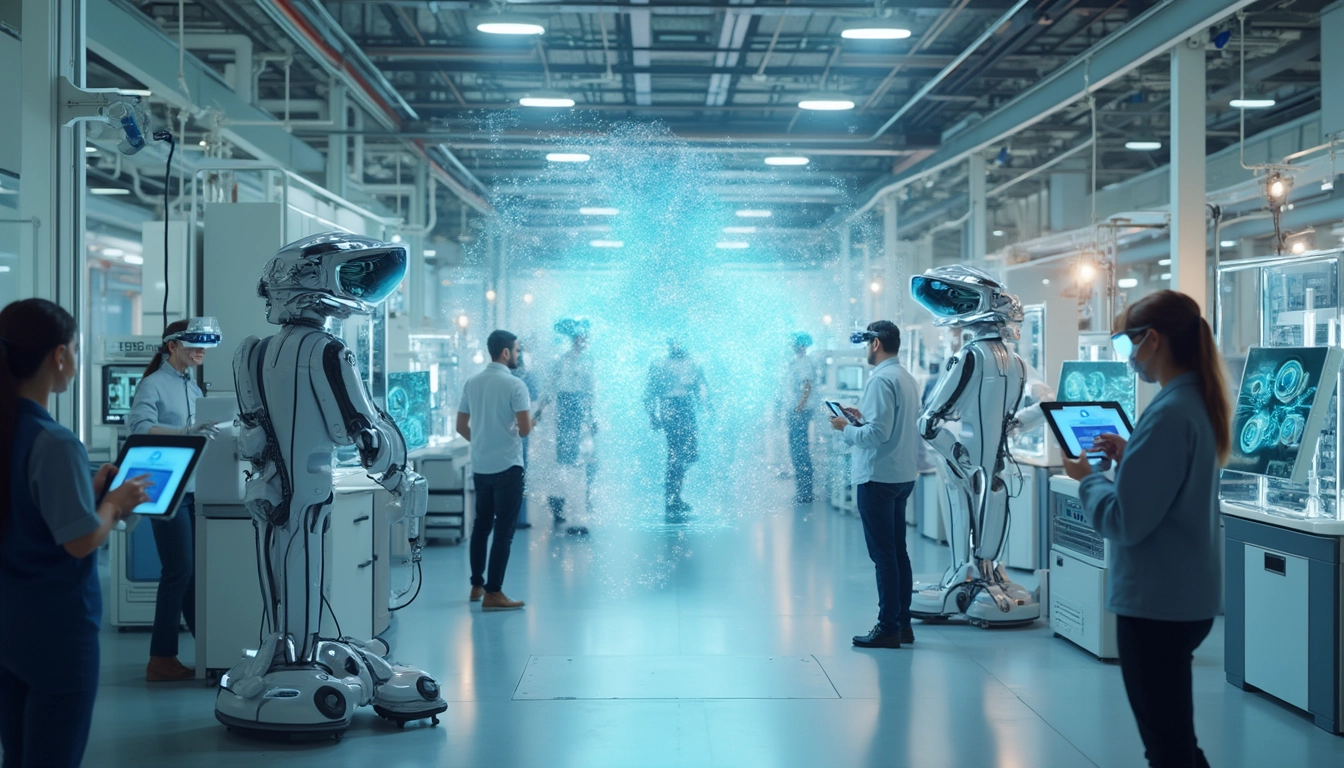
The evolving landscape of industrial automation, effective communication plays a pivotal role in shaping the future of manufacturing and production processes. As we look towards 2025, it's crucial to examine the current trends of 2024 and predict how they will transform in the coming years. This comparative analysis will explore the key communication trends in industrial automation, highlighting the shifts we can expect to see from 2024 to 2025 and beyond.
In 2024, artificial intelligence (AI) is already revolutionizing the way users interact with automated systems. AI-powered interfaces are becoming more intuitive, allowing for smoother human-machine collaboration. This trend is set to continue, with AI playing an increasingly significant role in enhancing user experiences across various industrial applications.
The automation of communication processes has become a standard practice in 2024. From automated notifications to AI-generated reports, industries are leveraging technology to streamline information flow, reduce human error, and increase efficiency.
Companies are adopting omnichannel approaches to ensure seamless communication across various platforms. This strategy allows for consistent messaging and improved customer experiences, regardless of the communication channel used.
The shift towards cloud storage and computing has gained significant momentum in 2024. Cloud-based solutions offer increased flexibility, scalability, and accessibility, making them invaluable for industrial automation communications.
With the proliferation of smart devices, a mobile-first approach has become essential. Industrial automation systems are increasingly designed with mobile compatibility in mind, allowing for remote monitoring and control.
As we move into 2025, the integration of 5G technology in industrial automation is expected to accelerate. This will enable faster, more reliable communication between devices, paving the way for real-time data processing and decision-making.
The trend towards autonomous systems is set to expand further in 2025. We can expect to see more self-operating machines and robots that can communicate with each other and make decisions independently, with minimal human intervention.
Digital twins, virtual replicas of physical systems, are predicted to become more prevalent in 2025. These digital models will enhance communication between different stages of production, allowing for better planning, monitoring, and optimization of industrial processes.
As industrial automation systems become more interconnected, the need for robust cybersecurity measures will intensify. In 2025, we can expect to see advanced security protocols and AI-driven threat detection systems becoming standard in industrial communication networks.
The future of industrial automation lies in customizable and flexible solutions. By 2025, we anticipate seeing more modular automation systems that can be easily adapted to changing production needs, with communication protocols designed to support this flexibility.
The evolution of communication trends in industrial automation will lead to significant improvements in efficiency and productivity. Real-time data exchange, AI-driven decision-making, and autonomous systems will optimize processes and reduce downtime.
As communication interfaces become more sophisticated, we can expect to see improved collaboration between humans and machines. This will lead to safer working environments and more effective problem-solving in industrial settings.
The abundance of data generated by interconnected systems will enable more informed decision-making. By 2025, we can expect to see advanced analytics tools that can process this data in real-time, providing actionable insights to improve industrial processes.
Communication trends will also play a crucial role in promoting sustainable practices in industrial automation. Improved data exchange and monitoring capabilities will allow for better resource management and energy efficiency.
As industrial automation becomes more complex, there will be a growing need for skilled professionals who can manage and maintain these advanced systems. This presents both a challenge and an opportunity for workforce development and training.
With the increasing diversity of automation technologies, ensuring interoperability between different systems will be crucial. The development of universal standards for communication protocols will be a key focus area in the coming years.
Finding the right balance between automated processes and human involvement will be an ongoing challenge. Effective communication strategies will be essential in ensuring that automation enhances, rather than replaces, human capabilities in industrial settings.
As we look towards 2025 and beyond, it's clear that communication trends in industrial automation will continue to evolve at a rapid pace. The integration of AI, 5G, and advanced data analytics will drive significant improvements in efficiency, productivity, and sustainability. However, these advancements also bring challenges that need to be addressed, particularly in terms of cybersecurity, skills development, and standardization.
To stay competitive in this rapidly changing landscape, businesses must stay informed about these trends and be prepared to adapt their communication strategies accordingly. By embracing these emerging technologies and focusing on developing flexible, secure, and efficient communication systems, industries can position themselves at the forefront of the industrial automation revolution.
The future of industrial automation communication is bright, promising a world where machines and humans work together seamlessly, driven by intelligent systems and real-time data exchange. As we move from 2024 to 2025 and beyond, the key to success will lie in our ability to harness these communication trends effectively, creating smarter, more efficient, and more sustainable industrial processes.