What are they and how do they work.
As we navigate our way through the Fourth Industrial Revolution (a.k.a Industry 4.0 or 4IR) as concept which we come across fairly often is Cyber-Physical Systems (CPS).
After recently reading an article on how 4IR is advancing the onboarding and automation of technology within the industrial space we thought that the topic of CPS is one which warrants an article. This concept of CPS is rather fascinating, to say the least.
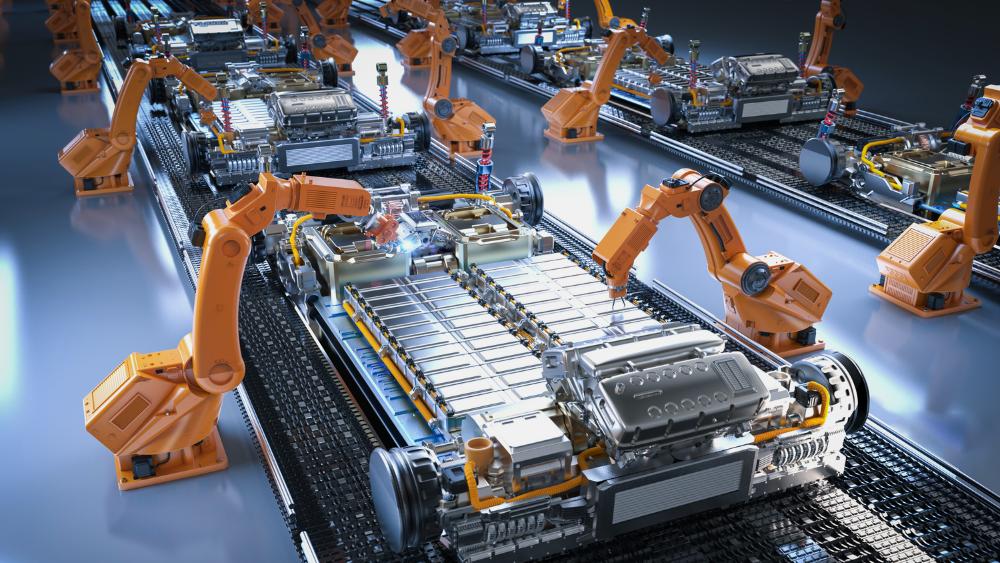
A CPS is a system that integrates computational elements (cyber) with physical processes (physical). In a CPS, embedded computers and networks monitor and control the physical processes, often with feedback loops where physical processes affect computations and vice versa. Of high relevance to us in the industrial automation sector is the fact that CPS’s are evolving at a rapid rate, performing key functions at an ever increasing rate.
Founded in 2009 by CEO RJ Scaringe, Rivian has emerged as a key player in the electric vehicle (EV) market. With a focus on adventure-ready electric vehicles, this industry-leading EV company has garnered significant attention and investment from major companies around the world, enabling them to fast-forward their developments in the EV game.
Key Characteristics of CPS
CPS tightly couples digital (software, data processing) and physical (hardware, machinery) elements. These systems interact continuously, with the physical components being controlled and monitored by the cyber components. CPS often operates in real-time, meaning that computational processes must be performed quickly enough to affect physical processes immediately. This is crucial in applications where timing is critical, such as in autonomous vehicles or industrial automation.
Sensors constantly gather data from the physical environment, which is then processed by the computational system. The system uses this data to make decisions and send commands back to the physical components, creating a continuous feedback loop.
A CPS typically involves networked communication between various components, often using the Internet of Things (IoT). This allows different parts of the system to communicate and coordinate actions, leading to more complex and sophisticated behavior, and greater autonomy at the end of the day.
Such systems often includes elements of artificial intelligence or machine learning to enable autonomous decision-making. For example, a smart grid might use AI to manage energy distribution in real time based on demand patterns.
Examples of CPS:
Autonomous Vehicles: These vehicles use sensors, cameras, and GPS data to navigate and control physical movement in real-time, with onboard computers processing vast amounts of data to make decisions.
Smart Grids: In energy systems, CPS can monitor and manage electricity distribution, optimizing the flow of power based on real-time demand and supply conditions.
Industrial Automation: In factories, CPS integrates robotic arms, sensors, and control systems to automate and optimize production processes.
Healthcare Systems: CPS can be found in medical devices that monitor patient conditions and automatically adjust treatments, like insulin pumps or pacemakers.
Importance of CPS
CPS represents a major advancement in technology by enabling systems to be more responsive, efficient, and capable of complex tasks that require close coordination between the digital and physical worlds. They are fundamental to modern innovations like smart cities, autonomous systems, and advanced manufacturing.
How would we make use of Cyber-Physical Systems?
Onicavox’s automation specialists would incorporate a Cyber-Physical System (CPS) into a complex automation system for a client by creating an interconnected network of sensors, actuators, and control systems that seamlessly integrates with the manufacturing processes (or whatever process is at hand). Implementation would take place in a similar fashion to this example:
Specialists would install CPS to monitor and control robotic arms, conveyor belts, and assembly stations in real-time. Sensors collect data on machine performance, material quality, and environmental conditions, which the system uses to adjust operations, ensuring optimal efficiency and precision.
By integrating CPS, the system can continuously monitor the health of machinery and predict potential failures before they occur. This minimizes downtime by scheduling maintenance only when needed, rather than on a fixed schedule, reducing costs and improving productivity.
CPS can be used to implement real-time quality control checks during the manufacturing process. Cameras and sensors inspect each product component as it's assembled, after which the system automatically identifies defects, ensuring that only high-quality parts move forward in production.
By incorporating CPS, Onicavox would create a highly efficient, responsive, and adaptable production environment that can meet the complex demands required, while maintaining high standards of quality and safety.
Lastly, what would be the main difference between a CPS and Artificial Intelligence (AI)?
Among other examples, the main would be that a CPS encompasses the entire system, including hardware (sensors, actuators, machines) and software that work together to control physical processes. CPS is concerned with the real-time operation and physical effects of computing.
On the other hand AI is specifically about the intelligence component of a system. It can be applied within a CPS to enhance decision-making, prediction, and adaptability, but AI itself doesn’t directly control or interact with the physical environment.
With technology advancing at such a fast rate the need for integration of components within fast paced environments is becoming a necessity in more ways than once. CPS provides an all-encompassing solution to bringing all the components together for optimal outputs.
_________________________________________________________________________________________
Here at Onicavox we strive to be at the forefront of the future of automation, empowering businesses across industries by helping them optimise their operations and maximising productivity. As a leading provider of cutting-edge automation solutions, we strive to transform the way businesses operate, enhancing efficiency, accuracy, and profitability.
Is your business ready to scale-up it's automation game? Onicavox is here to help. Please get in touch.