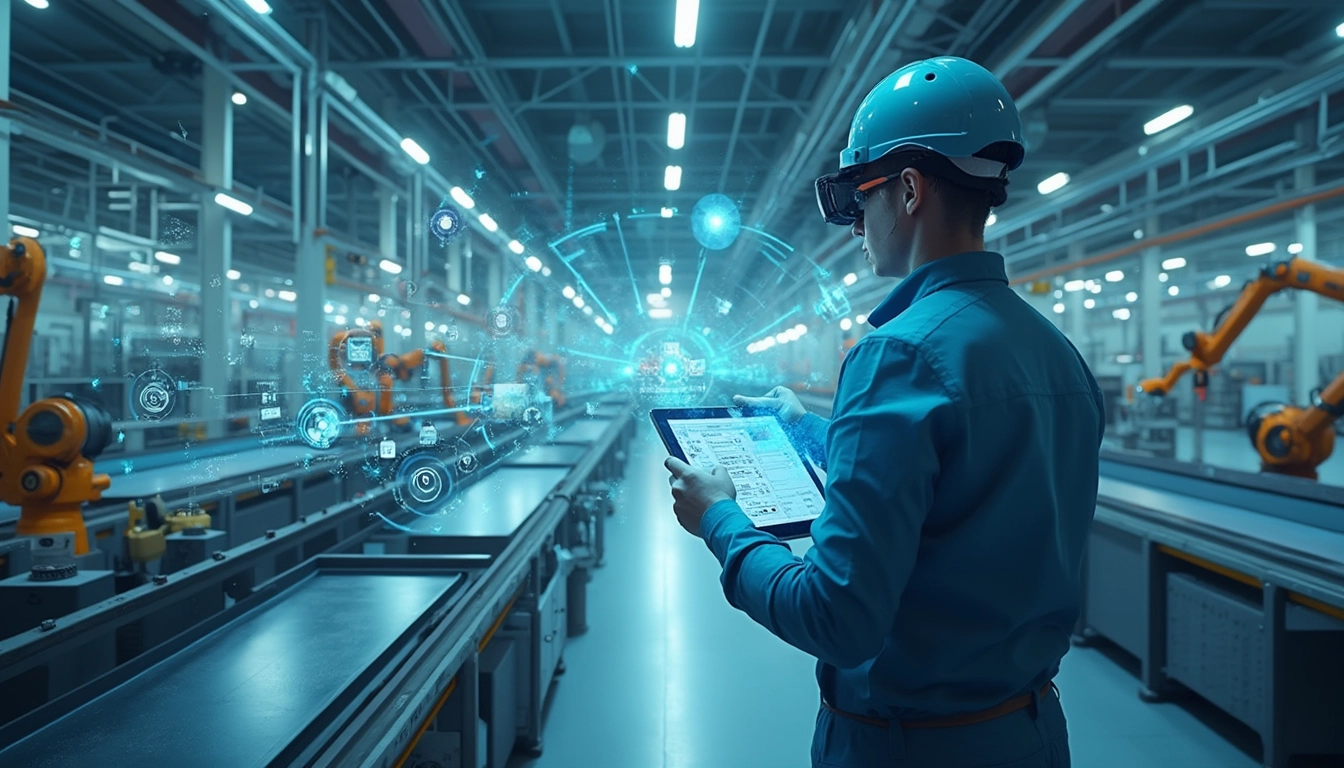
The Industrial Internet of Things (IIoT) is revolutionizing the way automation systems communicate and operate. As we delve into the world of smart factories and interconnected devices, it's crucial to understand how IIoT is reshaping the landscape of industrial communication protocols and driving unprecedented levels of efficiency and productivity.
Traditional automation systems relied on a handful of communication protocols, each designed for specific applications. However, with the advent of IIoT, we're witnessing a shift towards more versatile and interoperable communication standards. Let's explore some of the key protocols that are paving the way for this transformation:
Modbus, a stalwart in industrial communication, continues to play a significant role in the IIoT era. Its simplicity and reliability make it an excellent choice for connecting legacy systems to newer IIoT platforms. As automation systems evolve, Modbus acts as a bridge between the old and the new, ensuring smooth transitions to more advanced IIoT implementations.
Open Platform Communications Unified Architecture (OPC UA) has emerged as a game-changer in IIoT communication. Its platform-independent nature and robust security features make it ideal for connecting diverse devices and systems across the industrial landscape. OPC UA's ability to facilitate seamless data exchange between different vendors' equipment is crucial for realizing the full potential of IIoT in automation systems.
Message Queuing Telemetry Transport (MQTT) has gained significant traction in IIoT applications due to its lightweight nature and efficient use of network bandwidth. This publish-subscribe protocol is particularly well-suited for scenarios where connectivity may be intermittent or where devices have limited processing power, making it an excellent choice for large-scale sensor networks in industrial environments.
The integration of IIoT in automation systems is bringing about several transformative changes in how devices and systems communicate:
IIoT enables the collection of vast amounts of data from sensors and devices across the production floor. This wealth of information, when properly analyzed, provides invaluable insights into process efficiency, equipment health, and overall system performance. The ability to communicate this data in real-time allows for more informed decision-making and predictive maintenance strategies.
With IIoT, automation systems are no longer confined to rigid, hierarchical communication structures. The adoption of IP-based protocols and wireless technologies allows for more flexible network topologies, making it easier to add, remove, or reconfigure devices without significant downtime or rewiring.
IIoT is bridging the gap between Information Technology (IT) and Operational Technology (OT). This convergence enables better coordination between business systems and shop floor operations, leading to more agile and responsive manufacturing processes.
While the benefits of IIoT in automation communication are clear, there are several challenges that need to be addressed:
As automation systems become more connected, they also become more vulnerable to cyber threats. Implementing robust security measures, such as end-to-end encryption and secure authentication protocols, is crucial to protect sensitive industrial data and prevent unauthorized access.
The proliferation of different IIoT protocols and platforms can lead to interoperability issues. Industry-wide efforts to standardize communication protocols and data formats are essential for ensuring seamless integration across diverse automation systems.
Many industrial facilities still rely on legacy equipment that may not be IIoT-ready. Developing strategies and technologies to integrate these older systems into the IIoT ecosystem without compromising functionality or security is a significant challenge.
As IIoT continues to evolve, we can expect to see further advancements in automation communication:
The rollout of 5G networks and the increasing adoption of edge computing will enable even faster and more reliable communication between devices. This will open up new possibilities for real-time control and decision-making in automation systems.
Artificial Intelligence (AI) and Machine Learning (ML) algorithms will play a larger role in optimizing communication pathways, predicting network issues, and automatically adjusting system parameters for optimal performance.
Blockchain technology may find its way into industrial communication, providing a secure and transparent way to exchange data and verify transactions between different parties in the supply chain.
The integration of IIoT is fundamentally changing how automation systems communicate, offering unprecedented levels of connectivity, data insights, and operational efficiency. As industries continue to embrace this technology, we can expect to see even more innovative applications and communication protocols emerge, further revolutionizing the world of industrial automation.
By staying informed about these developments and carefully considering the challenges and opportunities presented by IIoT, businesses can position themselves to take full advantage of this transformative technology, driving their automation systems into a more connected and intelligent future.